
Microscope Images of Cells
Background
Phytoplankton are microscopic, single-celled plants that are found in almost every aquatic environment including fresh and marine waters and even moist soils. As producers (autotrophs), they form the basis of all aquatic food chains, giving off oxygen as a by-product of photosynthesis. The oceans produce 20 BILLION tons of phytoplankton per year which produce 65-75% of the world's oxygen.
Diatoms are one of the most common types of phytoplankton. A characteristic feature of these single-celled algae is that they are encased within a unique cell wall made of silica that is almost like a glass house, thus allowing light to pass through to the chloroplast for photosynthesis. The construction of the cell wall (called the frustule) consists of two valves that fit into each other like a little pill box, with an amazing diversity in form that shows complex shapes, sizes, and patterns. Some have elaborate ornamentation or small projections to bolster the plant's ability to float in the water closer to the sunlight.
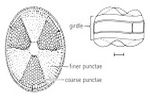
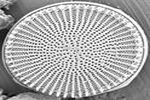
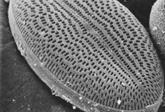
Due to the wide diversity in form, beautiful symmetry, and exquisite design of diatom frustules, the cells are ideal subjects for study under the microscope. About a thousand times smaller than a pinhead, diatoms are commonly between 20-200 microns in length, and due to the intricate markings of certain species they are even used in testing the resolving power of microscope lens.
Many species of diatoms are restricted to certain regions with specific pH, salinity, and nutrient levels. When nutrient and light conditions are right, all diatoms are able to bloom - reproduce very quickly into huge numbers. Knowing what species grow where, scientists can use diatom communities as a tool for monitoring environmental conditions and they are being used to monitor everything from water quality, effects of acid rain, and global climate change. Due to their sensitivity to pollutants, diatoms have frequently been used to evaluate the impact of domestic sewage or industrial waste on the aquatic environment. In a non-polluted environment there will usually be a very high diversity of diatoms, while a polluted environment will show a very low diversity with only a few different kinds of diatoms. Because the cell walls of diatoms are composed of silicon, they are preserved in lake and ocean sediments. Thus, their fossils can be used to reconstruct past environmental conditions, such as climatic records, over time
Under certain conditions great concentrations of diatom frustules can accumulate and be preserved enough to form sediments. Rock that is largely composed of diatoms is called diatomite. These deposits are of economic benefit with diatomite used commercially in high quality chemical filters, sugar refining, toothpaste, fireproof insulation, silver polish, paint, and as an abrasive agent in flea powder.